- Biblical Maps
- Home Page
- History of Israel Blog
- Ancient Mesopotamia
- Map of Palestine
- Abraham
- Ancient Israel
- 12 Tribes of Israel
- Jerusalem
- The Book of Isaiah
- Palestine
- The Habiru
- Contact Us
- Bible Study Forums
- Media Page
- Visitors Sitemap
- Privacy Policy
- The History of the Old Testament
- In the Days of Noah
- The City of Jericho
VISIT OUR FACEBOOK PAGE!
History of Palestine
Ancient Israel is entwined with the land and history of Palestine. No other land in the world is so firmly entrenched in a country's history as Palestine is in Israel's.
In fact, ancient Palestine, also referred to as Canaan, or Israel, has come to be known as the Holy Land.
However, the history of this land is anything but holy. Some of the world's oldest and most powerful empires have left bloody footprints in Palestine.
Every region of Palestine has seen its share of bloody conflict, from ancient times to today. The word Palestine derives from the Greek word, Philistia, which was the Greek name for the Philistines who inhabited the coastal regions (modern day Gaza Strip) during the Iron Age. Goliath was a Philistine.
Few other countries possess geography as varied as Palestine's. Mountains, fertile plains and valleys, coastal regions, rivers, deserts and wilderness cover the region.
ANCIENT NEAR EAST
Ancient Mesopotamia
: Ancient Mesopotamia and the history of Palestine are entwined with each other even before the Bible.
Abraham
migrated from ancient Mesopotamia.
Ancient Egypt Geography
: Ancient Egypt geography led Egypt to seek control of routes leading to
the east. Thus, the country often came into conflict with Palestine and
Israel.
Ancient Syria
: Palestine and Syria shared much more than geographical location. The
two countries fought each other frequently in the Old Testament.
Cedars of Lebanon: The cedars of Lebanon were the most sought after timber in the ancient world. Kings and Pharaohs sought after this precious resource. Consequently it played a significant role in ancient Lebanon's economy and culture.
Click to Post Your Thoughts.
Have you ever visited Palestine? Do you have a story or experience to
share? Give us your insights, thoughts, questions, and comments on
Palestine!
HISTORY OF PALESTINE
Pre Biblical Ancient Palestine
The rich history of ancient Palestine extends back thousands of years
before Abraham set foot in Canaan. Canaanite culture was well developed,
consisting of complex relations and loyalties.
Maps of Palestine from ancient times to the present day. The tribes of Israel are given in detail, as well as the many geographical features of the land.
|
Other Resources HISTORY OF PALESTINE
The modern day states of Egypt, Israel, Jordan, Saudi Arabia,
Lebanon, Syria, Turkey, Iraq and Iran occupy an area that comprise the
Ancient Near East.
It was in this region, known as The Cradle of Civilization, that the culture and influence of Europe, Asia, and Africa met. |
The Ancient Near East was dominated by two major powers, Egypt and Mesopotamia. Palestine was caught in the middle of these two great empires.
Consequently, the history of Canaan was largely shaped by these two powers.
This small strip of land was greatly influenced by the presence of these two empires. Palestine was essentially a land bridge between them.
The International Coastal Highway also ran through Palestine, providing important and vital links to trade, commerce, culture, etc.
Accordingly, Palestine's strategic importance was not lost on either empire, as they often struggled for control over her important trade and military routes.
The people of Palestine, thus, felt the imprint of many different cultures and religions. The people were influenced significantly by this diversity.
They also felt the brunt of war. Empires waged war over the important trade routes in Palestine, and sought to control this strategically located little stretch of land.
As a result, the history of Palestine is marred by countless bloody conflicts.
Empires such as the Egyptians, Babylonians, and Romans, waged wars to control the strategically important area, and to put down rebellions.
Conditions were also very favorable to agriculture in most of the Ancient Near East. The term, The Fertile Crescent, was coined to describe this region and its early agricultural settlements, which would eventually lead to village life.

The Fertile Crescent starts in the Persian Gulf, near modern day Basra. From the gulf it stretches northwest into Mesopotamia, which included the lands bordering the Tigris and Euphrates rivers.
From there, it runs into southern Turkey, encompassing modern day cities such as Diyarbekir, Samsat, and Gaziantep.
In southern Turkey, The Fertile Crescent bends southward, and runs along the eastern coast of the Mediterranean Sea.
The Crescent then makes its way southward down the coast to Israel, where it collides with the Negeb, and abruptly ends.
Sandwiched between the eastern coast of the Mediterranean and the desert is a thin line of country known as the Levant.
Syria formed the northern border of the Levant, while Palestine occupied the southern portion of the Levant.
Southwards of the Levant is the Negeb, leading across the Sinai peninsula into Egypt. Many of Israel's Patriarchs and heroes have traversed the Negeb throughout the history of Palestine.
East of the Levant is the Syro-Arabian desert. On the other side of the Syro-Arabian desert is Babylon, or, Mesopotamia. West of the Levant is the Mediterranean Sea, leading to Greece, Italy and Rome.
The geography of the land also played an extremely significant part in the history of Palestine.
Study Resource
Origins of the Name Palestine - Jewish Virtual Library
Back to History of Palestine
Back to Home Page
Recent Articles


-
The History of Ancient Israel
Dec 25, 23 02:16 PM
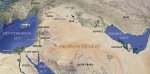 An easy to read history of ancient Israel from Old Testament times to today.
 -
The Ancient City of Jericho
Dec 18, 23 11:21 PM
 The city of Jericho is one of the most ancient cities on earth. The city played a crucial role in a number of Bible stories.
 -
Story of Cain and Abel
Dec 17, 23 01:20 PM
 The story of Cain and Abel is a tragic story of jealousy, rage and fratricide. It is the first murder in recorded history.
 -
The Twelve Tribes of Israel
Dec 17, 23 12:13 AM
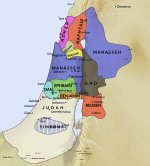 The twelve tribes of Israel originated with the twelve sons of Jacob.
 -
The Tribe of Gad
Dec 16, 23 11:54 PM
 The Tribe of Gad was a fierce tribe that participated in many of Israel's battles. They settled land east of the Jordan River.


Share Your Thoughts on Palestine
Have you ever been to Palestine? Do you have a unique experience? Share your opinions, experiences, thoughts and comments on Palestine.
What Other Visitors Have Said
Click below to see contributions from other visitors to this page...
Ebla, Syria 
Ebla, Syria was a city established by Eber in Genesis 11:16 .
Egyptian king Khafre who built the second pyramid at Giza traded Egyptian grain for Ebla …
God Gave the Land
God gave the land, which was HIS to give. So HE gave it to {Jacob } ISRAEL; and that is All that needs to be said.
When are the Jews Prophesied to Return to Palestine?
WHEN ARE THE JEWS PROPHESIED TO RETURN TO PALESTINE ?
The Jews (not just the Jews, but ALL Israelites) are prophesied to return to Palestine ONLY when …
The Edomites
The Edomites were descended from Esau who was renamed Edom. Esau was Jacobs brother and Jacob was later renamed Israel. He was the father of 12 sons who …
Second Advent (Armageddon)
Second Advent or Coming - Armageddon
Israel will only be gathered to Palestine AFTER the second advent (ARMAGEDDON) according to the Bible.
There …
Isaiah chapter 17
Syrian president Assad just announced a N.A.T.O. attack on Syria will bring about a Syrian attack on Tel-Aviv. Could the prophet Isaiah be right when he …
History of Palestine
I find it interesting Egyptian king Senusret III invaded Palestine and entered the city of Shechem after Jacob left Shechem for Bethel. Genesis 36:5-6 …
Where Are The Plains Of Mamre? Not rated yet
I don't know where the plains of Mamre are. It is where Abraham was, and where an Amorite man made friends with Abraham. It is probably the place of the …
When The Hebrews Reached Palestine. Not rated yet
(838.1) 74:8.9 The Hebrews had no written language in general usage for a long time after they reached Palestine. They learned the use of an alphabet from …
SAMUEL the SEER
Now Available in Print & eBook on Amazon!!
POPULAR TOPICS
Learn more about these popular topics below. The Bible is full of fascinating stories, characters and mysteries!
BIBLE MAPS
Explore the land of the Old Testament! View these maps of the Bible.